
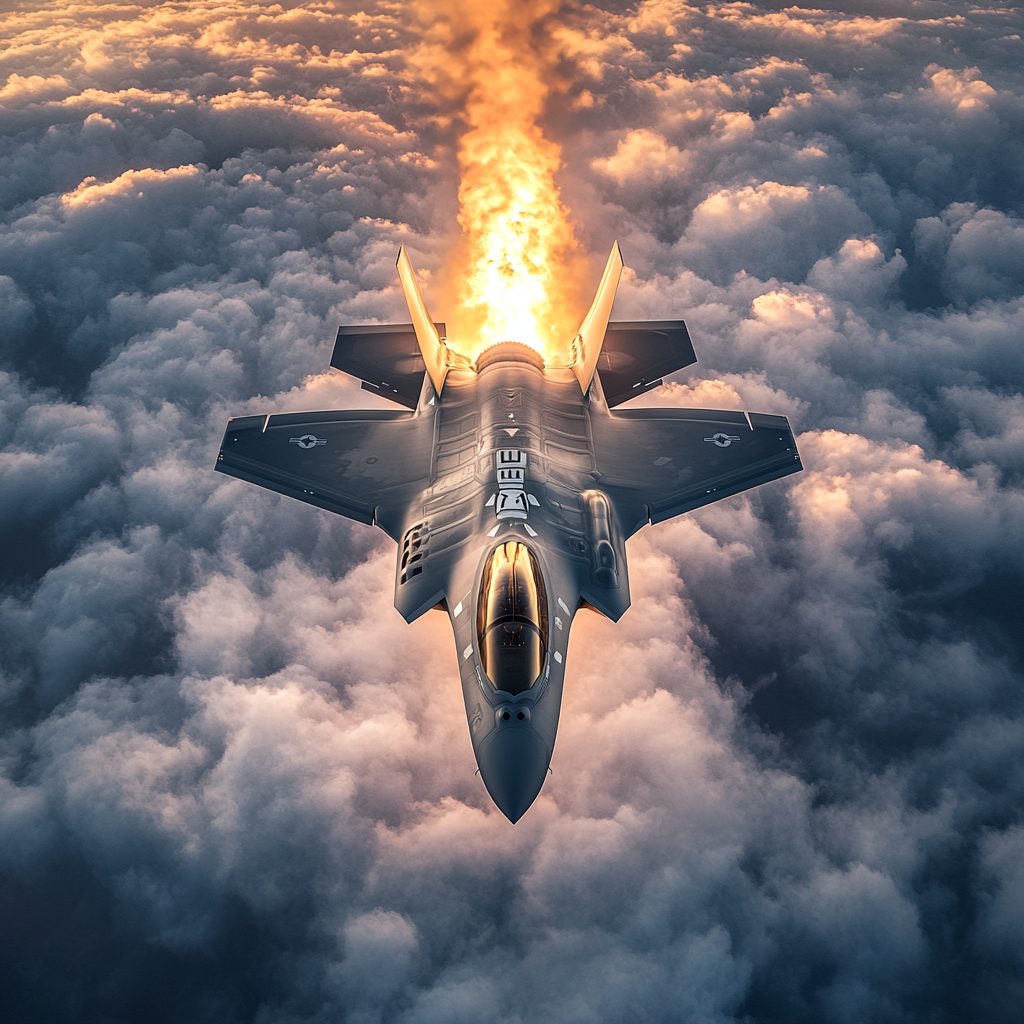

Saab’s Gripen E Just Got an AI Co-Pilot
Imagine a fighter jet that doesn’t just fly—it thinks.
That’s exactly what happened when Saab’s Gripen E fighter jet recently took to the skies with an AI co-pilot. And no, this wasn’t in a simulator or restricted test range. The aircraft executed real combat maneuvers in real airspace — with no human input! This leap was made possible thanks to Helsing’s “Centaur” AI system, which guided the jet through split-second tactical decisions, adjusting in real time as the situation evolved.
It’s not science fiction. It’s happening right now.
Real Combat Moves. No Human Hands.
Saab, a defense giant known for innovation in aerospace, partnered with Helsing, a European AI defense firm, to push the limits of what autonomous systems can do in military aviation.
Unlike previous test flights that are limited to safe zones and pre-set parameters, this one was different. The AI took control mid-flight, analyzing its environment, reacting to threats, and adjusting its course—all without waiting for instructions. Centaur didn’t just fly the plane. It made real-time combat decisions — the kind that used to rely solely on human pilots. This wasn’t a test of how well AI can follow rules. It was a demonstration of how AI can think on its feet — or wings — when the rules don’t exist yet.
Is This the Future of Air Combat?
This test flight marks a major turning point. We’re entering an era where AI isn’t just helping pilots — it’s potentially replacing them in certain combat roles.
According to Helsing, the goal isn’t to remove humans entirely but to give them a reliable partner in the cockpit. One that can process thousands of variables faster than any human possibly could.
“Centaur is built to handle pressure, uncertainty, and complexity at a scale no pilot can match,” one Helsing engineer said.
But that raises the question: how far do we want to go with this? Do we trust AI to make life-or-death decisions at Mach speed?
Balancing Innovation with Control
Autonomous systems in defense always bring up ethical and legal concerns. Can AI truly understand context the way a human does? What happens if it makes the wrong call? For now, the Gripen E still flies with a human pilot. But as these systems become more advanced, it’s easy to imagine a future where AI handles entire missions solo. The technology is moving fast. What remains slower is our ability to agree on how it should be used.
Techpresso covered this.
Quick Q&A: What People Want to Know
1. How did the Gripen E fighter jet use AI?
The Gripen E flew with Helsing’s Centaur AI, which acted like a virtual co-pilot. It performed combat maneuvers autonomously in real airspace, making decisions in real time—without relying on a human pilot for inputs during critical moments.
2. Is AI ready to fly combat missions alone?
Technically, it’s getting very close. AI systems like Centaur can now analyze battlefield conditions, react to threats, and adjust tactics on the fly. But full autonomy in real missions still raises safety, ethical, and legal questions that haven’t been fully resolved yet.
Do you think AI should have this much control in military settings? Is this progress — or something we need to slow down? Leave a comment below and join the conversation.
If you’re fascinated by how AI is being deployed in high-stakes environments, don’t miss another update — sign up for our AI Newsletter to stay sharp and informed.
And if your organization is exploring how to apply AI in defense, aerospace, or other complex fields, click here to see how our consulting team can support your goals safely and effectively.